How Do You Know if a Dog Has Ear Infection
My dog has merely been diagnosed with an inner ear infection. What is this?
Inflammation of the inner ear is chosen otitis interna , and it is most ofttimes caused by an infection. The infectious agent is most commonly bacterial, although fungus (otherwise known as yeast) can also be implicated in an inner ear infection.
If your dog has ear mites in the external ear culvert, this can ultimately cause a problem in the inner ear and pose a greater risk for a bacterial infection. Similarly, inner ear infections may develop if disease exists in i ear canal or when a beneficial polyp is growing from the center ear. A foreign object, such every bit grass seed, may also set up the stage for bacterial infection in the inner ear.
Are some dogs more susceptible to inner ear infection? 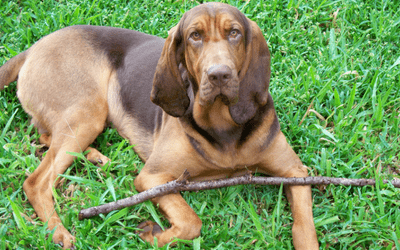
Dogs with long, heavy ears seem to be predisposed to chronic ear infections that can ultimately pb to otitis interna. Spaniel breeds, such as the Cocker Spaniel, and hound breeds, such as the Bloodhound and Basset Hound, are the almost unremarkably affected breeds. Regardless of brood, whatever dog with a chronic ear infection that is difficult to control may develop otitis interna if the eardrum (tympanic membrane) is damaged, every bit a damaged ear drum allows bacteria to migrate down into the inner ear.
"Dogs with long, heavy ears seem to be predisposed to chronic ear infections that ultimately lead to otitis interna."
Excessively vigorous cleaning of an infected external ear culvert can sometimes cause otitis interna. Some ear cleansers are irritating to the eye and inner ear and can crusade signs of otitis interna if the eardrum is damaged and allows some of the solution to penetrate too deeply.
What are the signs of an inner ear infection? 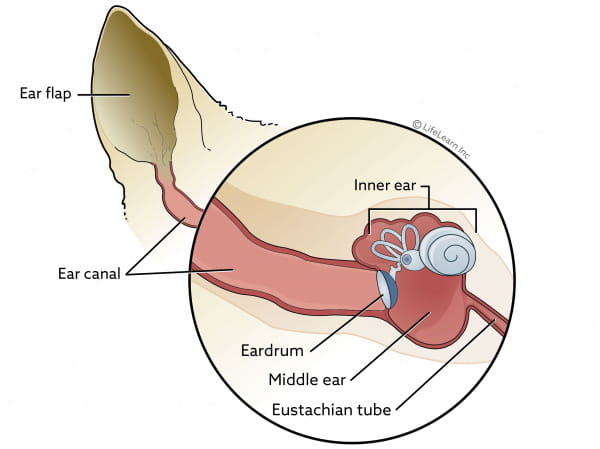
The signs of otitis interna depend upon the severity and the extent of the infection. Some dogs may show no outward signs at all, just yous may notice your dog is reluctant to chew or seems to exist in pain when opening his rima oris. He may milkshake his head or paw at the affected ear.
Your dog may develop a caput tilt, usually to the side of the infected ear, and he may even lean, fall, or curlicue toward the infected side. His rest may be completely contradistinct making it difficult to walk properly, and he may even walk in circles toward the side of the infected ear. If both ears are involved, you may see him swing his head from side to side like an elephant swinging its trunk, and he may take a difficult time staying on his feet. As well, dogs with active otitis interna cannot hear on the afflicted side(s).
Are there other signs I should scout for?
Vomiting and nausea may occur during the acute stage of otitis interna. If the facial nerve, which is located in the area of the inner ear, is damaged by an inner ear infection, your canis familiaris may develop some of the following symptoms:
- d rooling from the side of the mouth
- d ifficulty eating and dropping food
- disability to blink
- development of dry eye in the unblinking centre (meet handout "Keratoconjunctivitis Sicca (KCS) or Dry Middle in Dogs")
- eye discharge
- drooping of the eyelids, lips, and nostrils on the afflicted side
- signs of Horner'south syndrome (run across handout "Horner'south Syndrome in Dogs") which include uneven pupil size, chosen anisocoria (the pupil is smaller on the side on the infected ear), prominent tertiary eyelid, and drooping upper eyelid on the affected side
With long-term facial nerve paralysis the face up may really twist toward the side of the ear infection.
Boosted signs include redness in the afflicted ear and discharge with a foul smell. The outer ear canal may get thickened and difficult to the bear upon from chronic inflammation and the lymph node at the base of the chin on the affected side may become enlarged. Your canis familiaris may become reluctant to move at all, preferring to sit down or lay in ane spot and his head may swing from side to side, even at remainder. You may also notice brusk, rapid, side-to-side movements of the eyeballs called nystagmus .
How is otitis interna treated?
Otitis interna is a very serious status. If your dog is unable to eat or drink usually due to nausea or disorientation, and then hospitalization for intravenous fluid therapy is generally warranted. Nausea must be controlled and aridity avoided. Information technology may also be necessary to sedate or anesthetize your dog in society to adequately encounter the ear tissues, take samples for bacterial culture, and appropriately make clean the ear.
Treatment of the underlying infection is very of import, and your veterinary will prescribe the appropriate medications. Medications will be administered directly in the ear and orally. Antibiotics (such every bit amoxicillin-clavulanate, enrofloxacin, clindamycin, or cefpodoxime) volition be used for a bacterial infection for 6-viii weeks minimum. If the infection is fungal in nature, an anti-fungal medication (well-nigh often itraconazole) will be prescribed. Any medications are called, it is critical that they exist given precisely equally prescribed.
"If your dog has an altered balance, restrict his activity during treatment to forbid falling injuries."
If your dog has an altered remainder, restrict his activity during treatment to prevent falling injuries. These dogs should not have admission to stairs every bit they may accept a tumble. You may also need to hand feed your domestic dog temporarily - reaching down into a dish may stimulate nausea.
Dogs with otitis interna occasionally crave surgery if they take relapses, they do not respond to medical management, or if they deteriorate in spite of treatment. Surgery is reserved for dogs with fluid build-upward in the middle ear, an infection of the bone surrounding the ear (chosen osteomyelitis), or a mass (benign or malignant tumor) that arises from the heart ear or the eustachian tube (the tube leading from the middle ear to the back of the oral cavity). Surgery may be performed to bleed the middle ear cavity or, in severe cases of center and inner ear infection, the unabridged external ear culvert may besides be removed. For more data on this surgery, run across handout "Total Ear Canal Ablation and Bulla Osteotomy (TECA-BO)". The severity of the nervous system signs associated with otitis interna does not determine the need for surgery.
Are at that place any potential complications or long-term effects of otitis interna?
A severe inner ear infection tin can actually spread to the part of the brain that controls your domestic dog's animate and eye rate, although this is quite rare.
2 potential long-term complications of inner ear infection include a permanently altered sense of balance and/or persistent signs of Horner's syndrome. Your dog may also go permanently deaf in the affected ear.
That said, most dogs with otitis interna respond well to medical management. Expect a two- to four-month course of oral antibiotics to prevent a relapse. The altered sense of balance that generally accompanies otitis interna is typically improved within ii to six weeks. Small dogs may recover their balance more apace than large breeds.
Source: https://vcahospitals.com/know-your-pet/inner-ear-infection-otitis-interna-in-dogs
0 Response to "How Do You Know if a Dog Has Ear Infection"
ارسال یک نظر