whats the easiest engine to rebuild for a novice
Whether it is to breathe new life into a driver or work vehicle, or for hobby in a classic car, there are many cases in which rebuilding an engine can be a great alternative to replacing one. Generally speaking, rebuilding an engine tin be a large task, just i that is very possible with proper research, planning, and grooming.
Every bit the exact difficulty of a job like this can vary profoundly depending on the exact model of engine, and the number unlike types of engines is great, we will focus on how to rebuild a archetype pushrod fashion engine. The pushrod design uses an engine block shaped like a "5", places the camshaft in the block, and uses pushrods to activate the cylinder heads.
The pushrod has been used for many decades, and remains pop to this mean solar day due to its its reliability, simplicity, and piece of cake access to parts, when compared to other engine designs. In this pace by step guide, nosotros will become over what a typical engine rebuild would entail.
Materials Needed
- Air compressor
- Engine assembly lube
- Basic set of manus tools
- Accident gun and air hose
- Brass punch
- Camshaft bearing tool
- Cylinder diameter honing tool
- Cylinder diameter ridge reamer
- Electric drill
- Engine hoist (to remove engine)
- Engine stand
- Engine rebuild kit
- Fender covers
- Flashlight
- Jack stands
- Masking tape
- Oil drain pan (at to the lowest degree ii)
- Permanent marker
- Plastic sandwich bags and boxes (to store and organize hardware and parts)
- Piston band compressor
- Rod journal protectors
- Service Transmission
- Silicone gasket maker
- Timing gear puller
- Torque wrench
- Bike chocks
- Water displacement lubricant
Step one: Research and preview the removal process. Before beginning, thoroughly enquiry the removal and rebuild procedures for your specific vehicle and engine and gather all of the necessary tools for the job.
Most pushrod V8 engines have very similar designs, however it is always a good idea to exist knowledgeable on the specifics of the vehicle or engine you are working on.
If necessary, purchase a service manual, or find i on online, so that the exact procedures for a thorough, and quality rebuild are followed.
Function 2 of nine: Draining the vehicle'south fluids

Step ane: Raise the front end of the vehicle. Heighten the front of the vehicle off the ground, and lower it onto jack stands. Set the parking brake, and identify wheel chocks underneath the rear wheels.
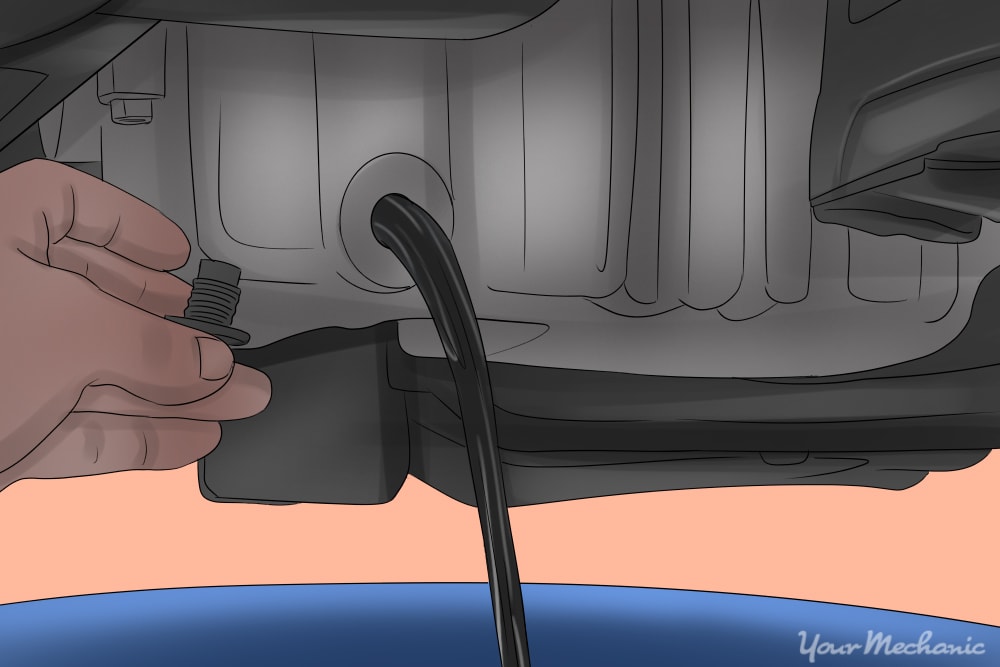
Footstep two: Drain the engine's oil into a pan. Identify fender covers on both fenders, and so proceed to drain the engine's oil and coolant into your drain pans.
Accept precaution to drain the oil and coolant into separate pans, as the ii mixed together can sometimes make proper disposal and recycling more hard.
Part 3 of 9: Prepare the engine for removal
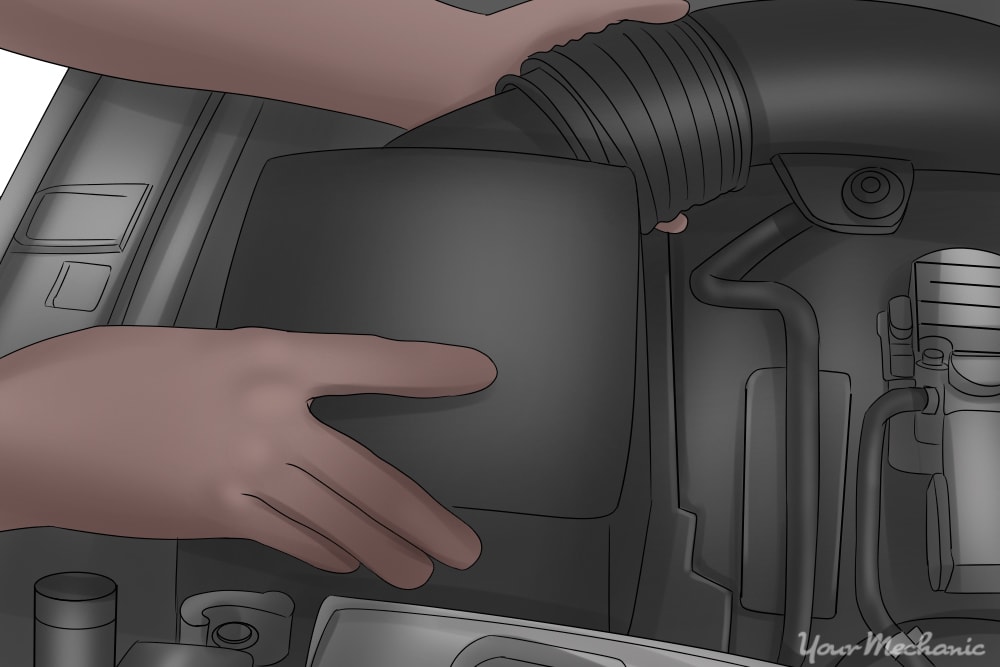
Pace 1: Remove whatever plastic covers. While the fluids are draining, proceed to removing whatsoever of the engine's plastic covers, equally well as any air intake tubes or filter housings that need to be removed before the engine can come out.
Identify any hardware yous remove into sandwich bags, and then label the bags using the masking record and mark, and then that no hardware gets lost, or left over during reassembly.

Step ii: Remove the radiator. Once the fluids are drained and covers removed, proceed to remove the radiator from the vehicle.
Remove the radiator brackets, undo the upper and lower radiator hoses, besides as any manual lines if necessary, and so remove the radiator from the vehicle.
Removing the radiator will prevent it from possibly being damaged when the engine is beingness lifted out of the vehicle.
Also, take this time to disconnect any heater hoses going to the firewall, most vehicles will usually take two of them that demand to be removed.
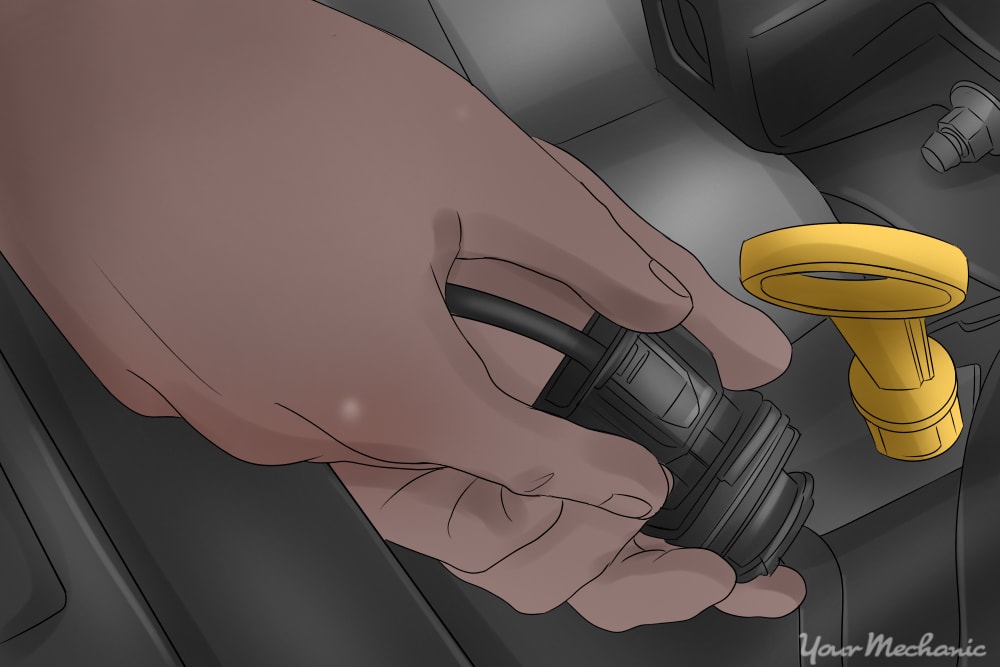
Pace three: Disconnect the battery and starter. Next, disconnect the bombardment, and then all of the engine's various harnesses and connectors.
Employ the flashlight to carefully check around the unabridged engine, including the underside and near the firewall, to make sure that no connectors are missed.
Also call up to disconnect the starter, which will be located on the underside of the engine. One time all of the electrical connectors have been unplugged, set the harness over to the side, out of the way.
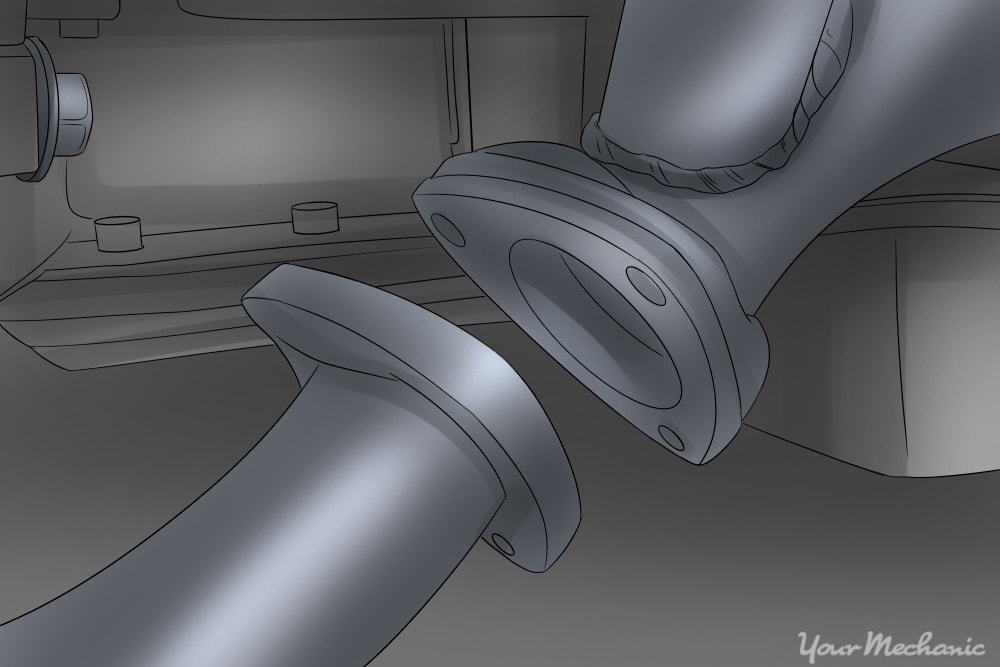
Step 4: Remove the starter and exhaust manifolds. With the harness out of the way, proceed to removing your starter and unbolting the engine'due south exhaust manifolds from their corresponding downpipes, and if necessary from the engine cylinder heads.
Some engines can be removed with the exhaust manifolds however bolted on, while others crave definite removal, refer to your service transmission for specifics if yous are unsure.
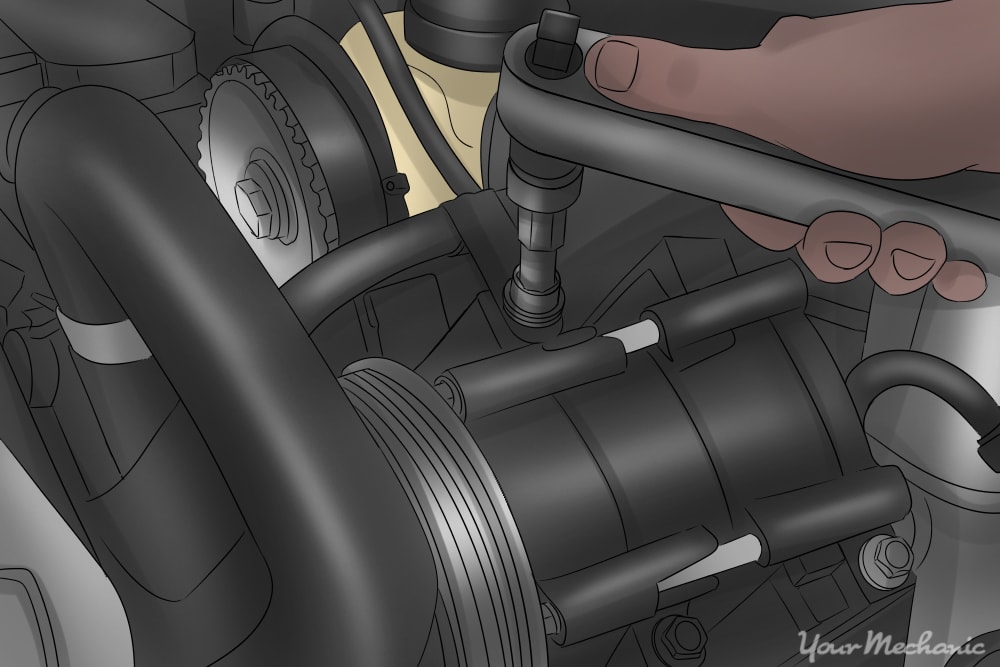
Stride 5: Remove the air compressor and belts. Next, if your vehicle is equipped with air conditioning remove the belts, and unbolt the air conditioning compressor from the engine and prepare information technology bated, out of the way.
If possible, leave the air conditioning lines attached to the compressor, as the system volition need to exist refilled with refrigerant later if it is opened.

Step half dozen: Unbolt the engine from transmission. Proceed to unbolting the engine from the transmission bell housing.
Support the manual with a jack if in that location is not a crossmember or mountain securing information technology onto the vehicle, and so remove all of the bell housing bolts.
Put all of the removed hardware in a plastic bag, and label it for easier identification during reassembly.
Part iv of 9: Removing the engine from the vehicle
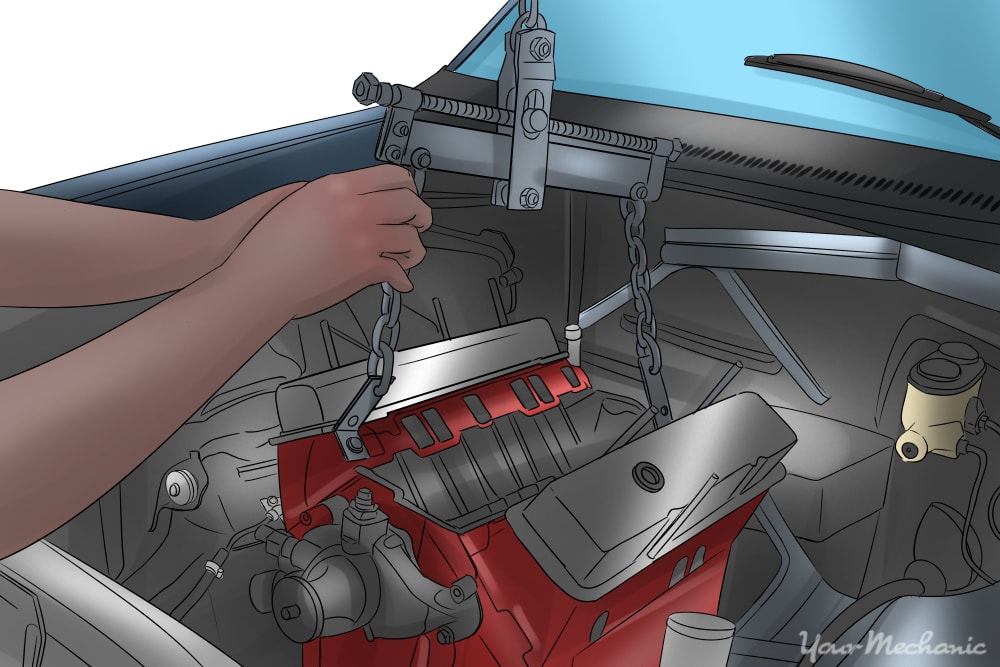
Stride 1: Prepare your engine hoist. At this indicate, position your engine hoist over the engine, and attach the chains to the engine in a safe and secure manner.
Some engines volition have hooks or brackets specifically in place for the engine hoist to hook onto, while others will require you to thread a bolt and washer through one of the chains links.
If y'all do run a commodities through one of the chains links, make sure that the bolt is of a high grade, and that it threads adequately into the commodities hole, every bit to ensure that it does not break, or damage the threads, with the weight of the engine.
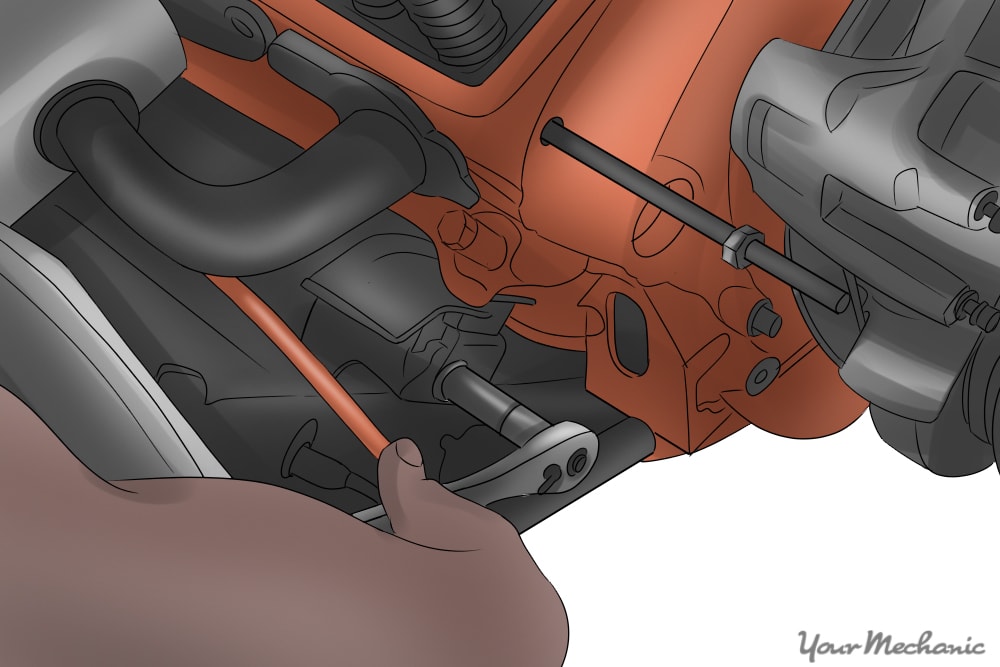
Step 2: Unbolt the engine from the motor mounts. Once the engine hoist is properly secured to the engine and all of the transmission bolts are removed, proceed to unbolting the engine from the motor mounts, leaving the motor mounts attached to the vehicle if possible.
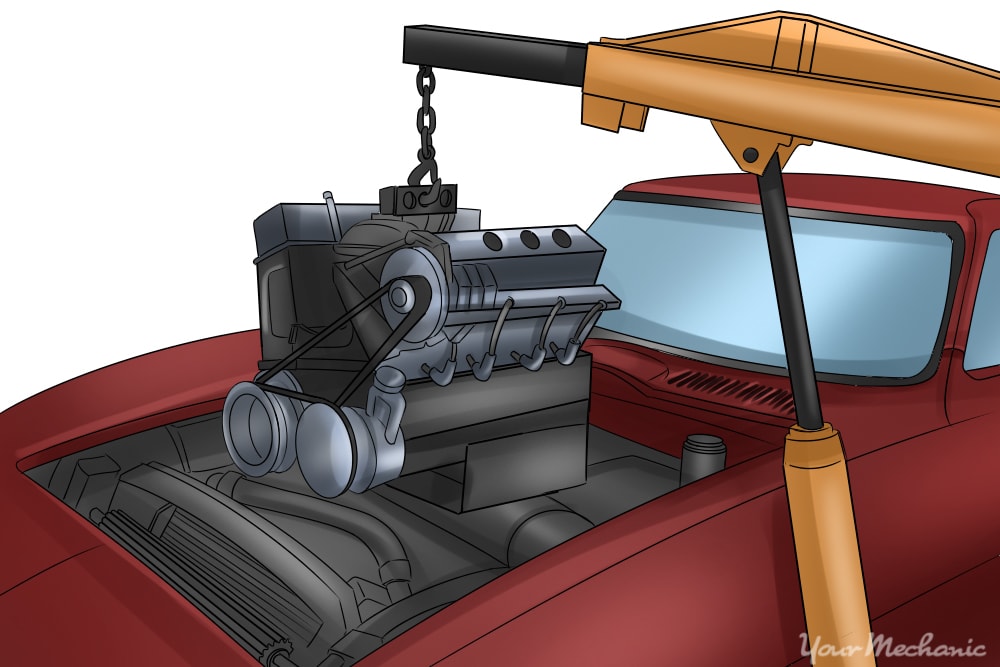
Step 3: Carefully lift the engine out of the car. The engine should now be prepare to come out. Advisedly double bank check to make sure that no electrical connectors or hoses remain continued, and that all the necessary hardware is removed, and then proceed to lift the engine out.
Elevator it out slowly, and advisedly maneuver it upwardly and away from the vehicle. If necessary, take someone help you with this step, every bit engines are very heavy, and can be cumbersome to try and maneuver on one's own.
Office 5 of 9: Mounting the engine onto the engine stand up
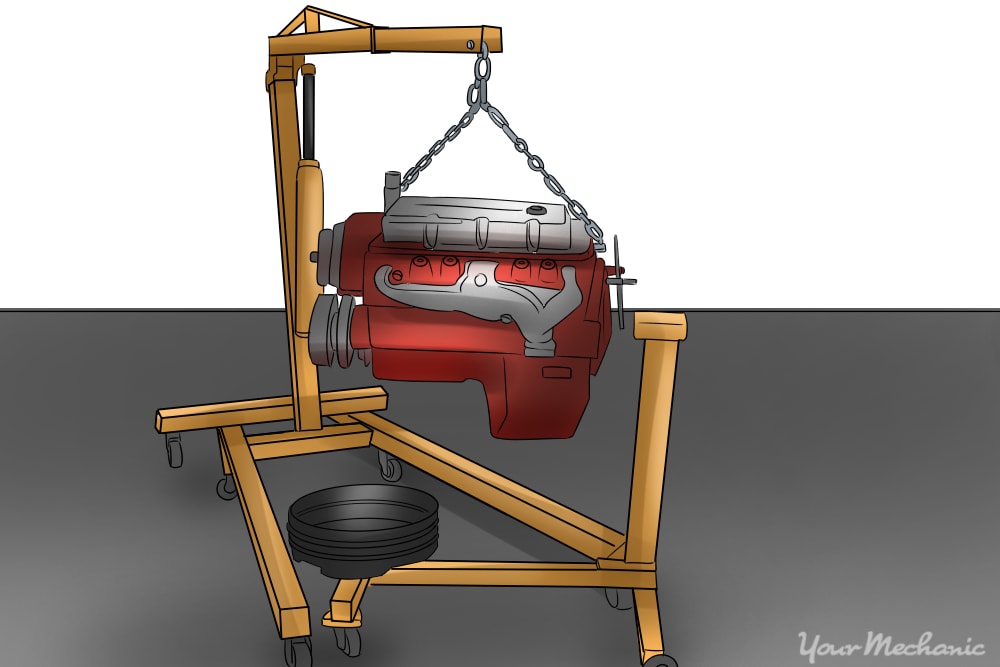
Step 1: Place the engine on an engine stand. With the engine removed, it is fourth dimension to mountain it onto the engine stand up.
Position the hoist over your engine stand and secure the engine to the stand up using basics, bolts, and, washers.
Once again, brand certain to use high grade bolts, to ensure that they practise not break under the weight of the engine.
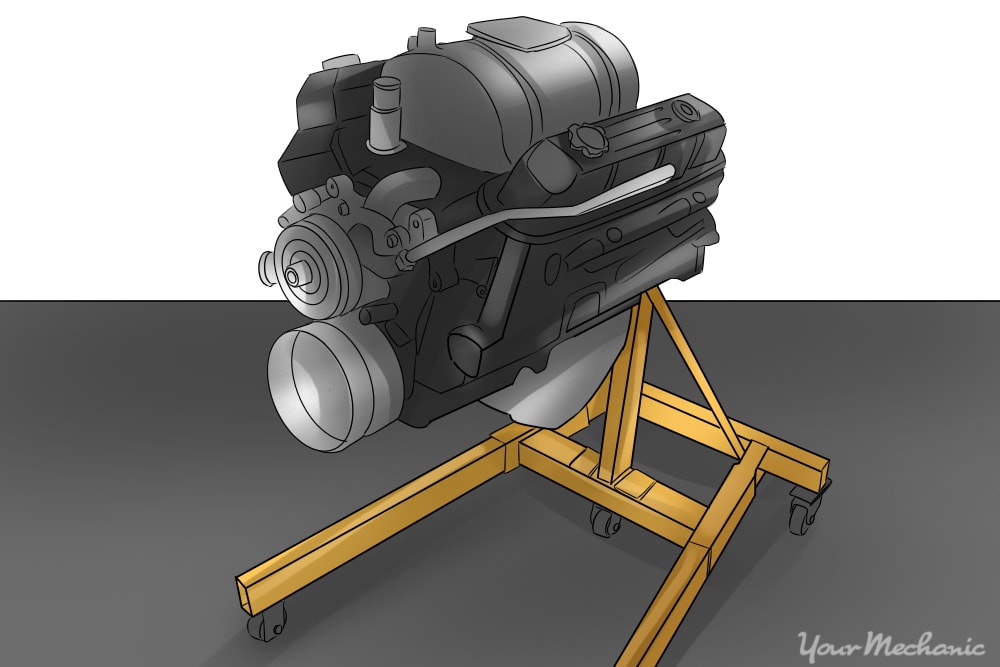
Role 6 of 9: Disassembling the engine
Stride 1: Remove all belts and accessories One time the engine is mounted we tin begin disassembly.
Begin by removing all of engine's belts and accessories if they take not been removed already.
Remove the distributor and wires, crankshaft pulley, oil pump, h2o pump, alternator, ability steering pump, and any other accessories or pulleys that may exist present.
Remember to properly store and characterization all of the hardware and parts that you remove to facilitate reassembly afterward on.
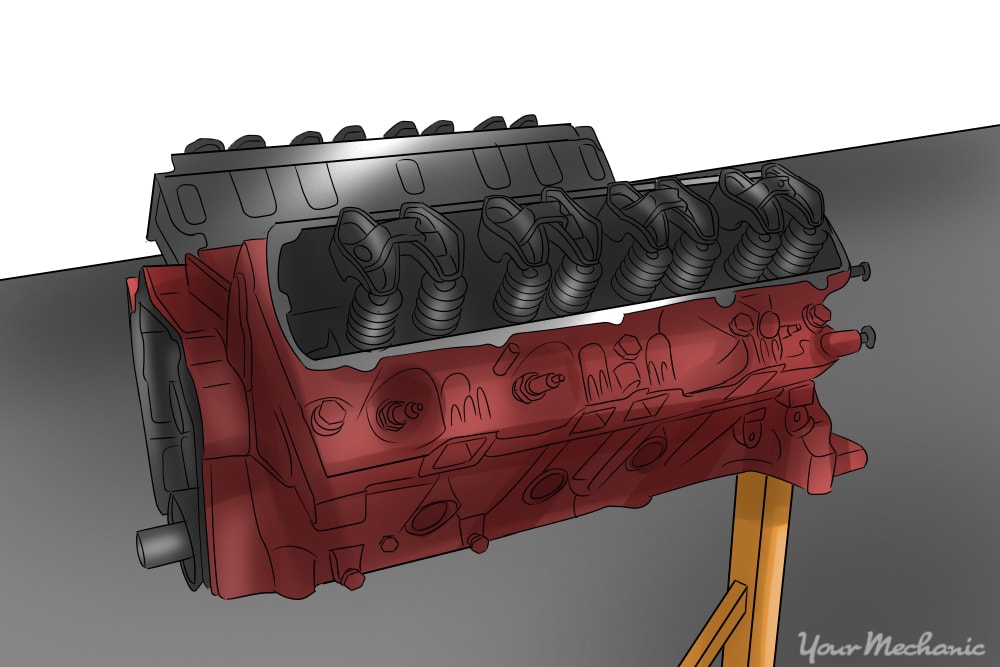
Step 2: Remove the bare components of the engine. One time the engine is blank, go along to removing the intake manifold, oil pan, timing cover, flexplate or flywheel, rear engine encompass, and valve covers from the engine.
Place a bleed pan underneath the engine to take hold of any remaining oil or coolant that may fall from the engine when these components are removed. Again, be sure to store and label all hardware appropriately for ease of assembly after.
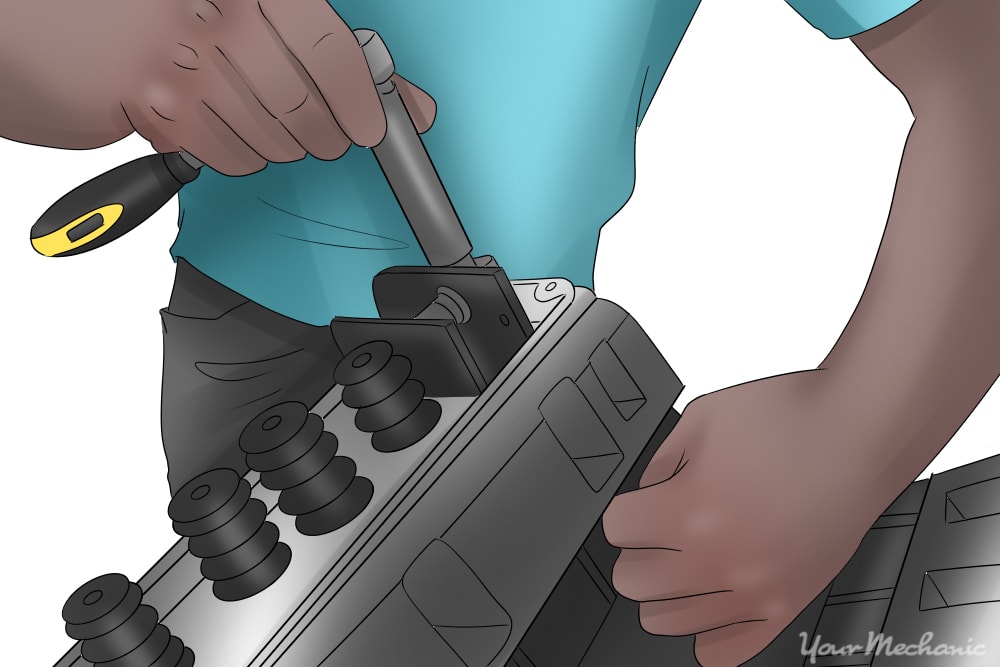
Step 3: Remove the rocker arms and pushrods. Disassemble the cylinder heads' valvetrain. Brainstorm by removing the rocker arms and pushrods, which should now be exposed.
Remove, and then closely inspect the rocker arms and pushrods to make sure that they are not bent or excessively worn at the contact points. Once the pushrods are removed, remove the lifter retainers and lifters besides.
Once all of the valve train components are removed closely inspect all of them. If you detect any of the components to be damaged, replace them with new ones.
Every bit these types of engines are very common, these parts are usually readily available on the shelf at most parts stores.
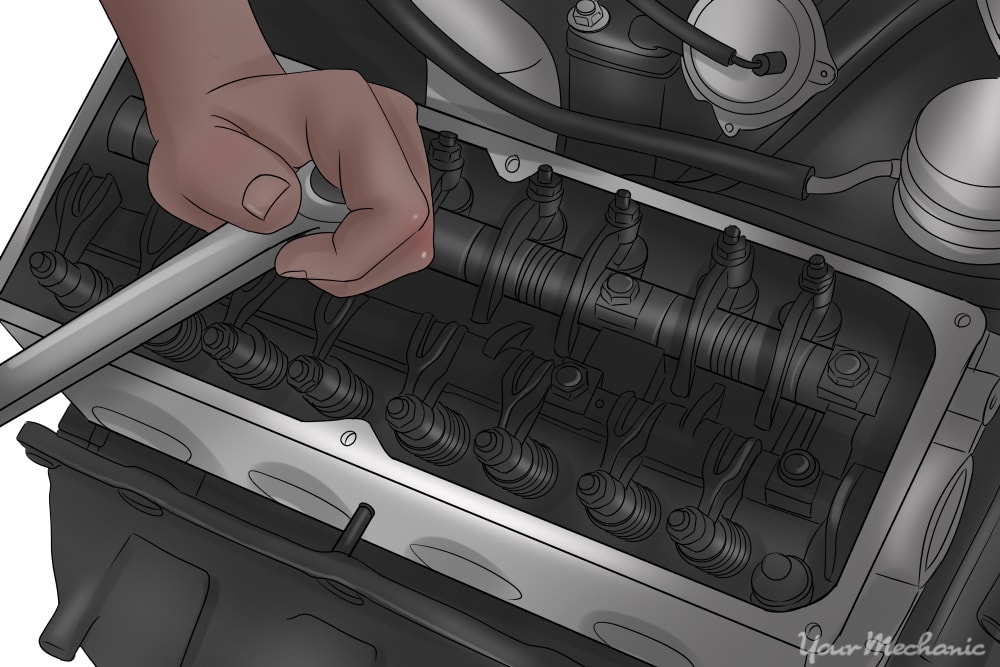
Step four: Remove the cylinder head. With the pushrods and rocker artillery removed, proceed to remove the cylinder head bolts.
Remove the bolts in an alternate mode, from outside to inside, to prevent the caput from warping when the torque is released, and so remove the cylinder heads from the block.
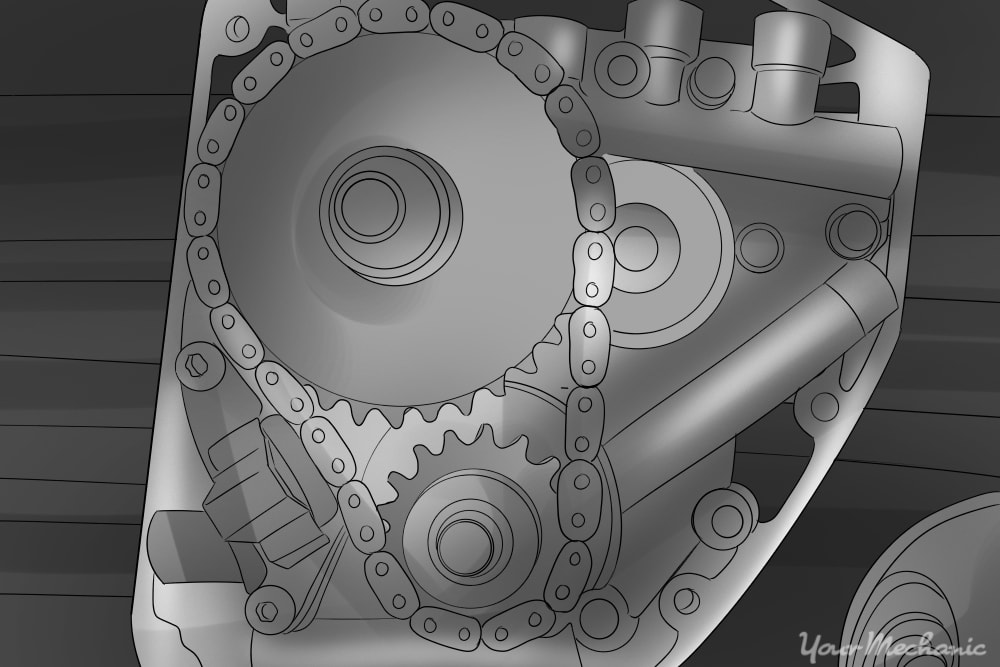
Footstep 5: Remove the timing chain and the camshaft. Remove the timing chain and sprockets that connect the crankshaft to the camshaft, and and so carefully remove the camshaft from the engine.
If either of the sprockets are difficult to remove utilize the timing gear puller to remove them.
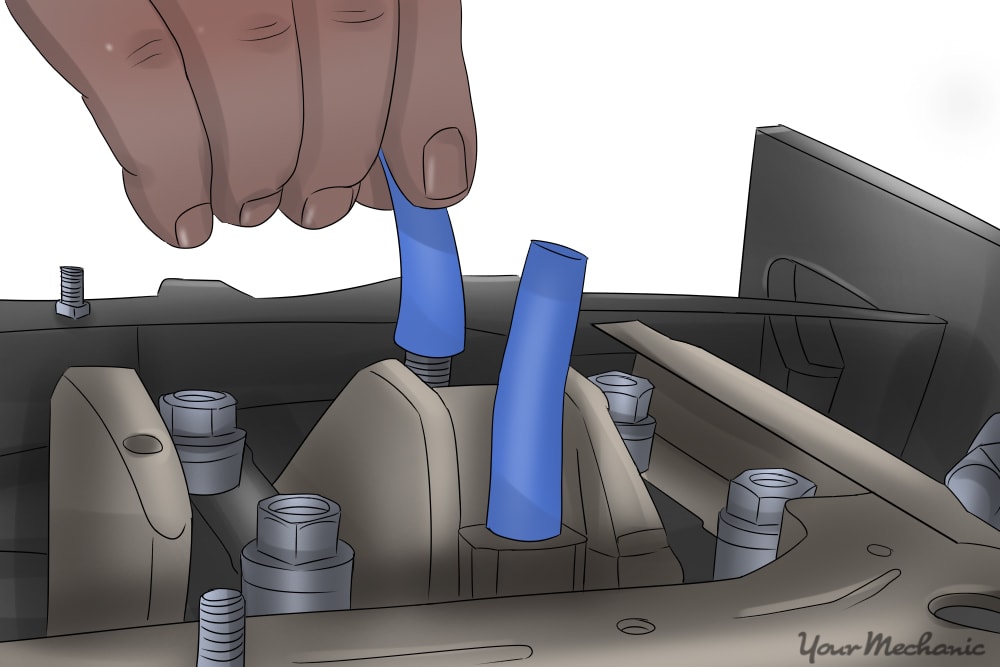
Stride vi: Remove the piston rod caps. Rotate the engine upside downward and begin to remove the piston rod caps one by one, keeping all of the caps with the same hardware that you lot removed from them as a set.
Once all of the caps are removed, place rod journal protectors on each of the connecting rod studs to prevent them from scratching or scoring the cylinder walls when they are removed.
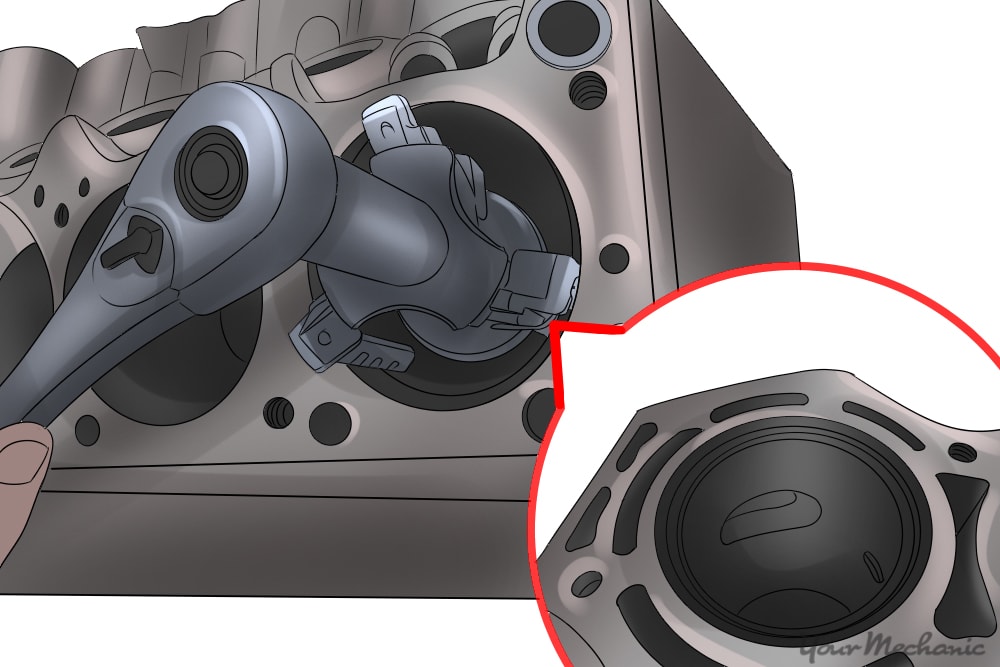
Pace vii: Make clean the tops of each cylinder. One time all of the connecting rod cease caps have been removed, apply the cylinder ridge reamer to remove the carbon build up from the tops of each cylinder, and and then pull each piston out, ane by ane.
Be conscientious not to scratch or harm the cylinder walls when removing the pistons.
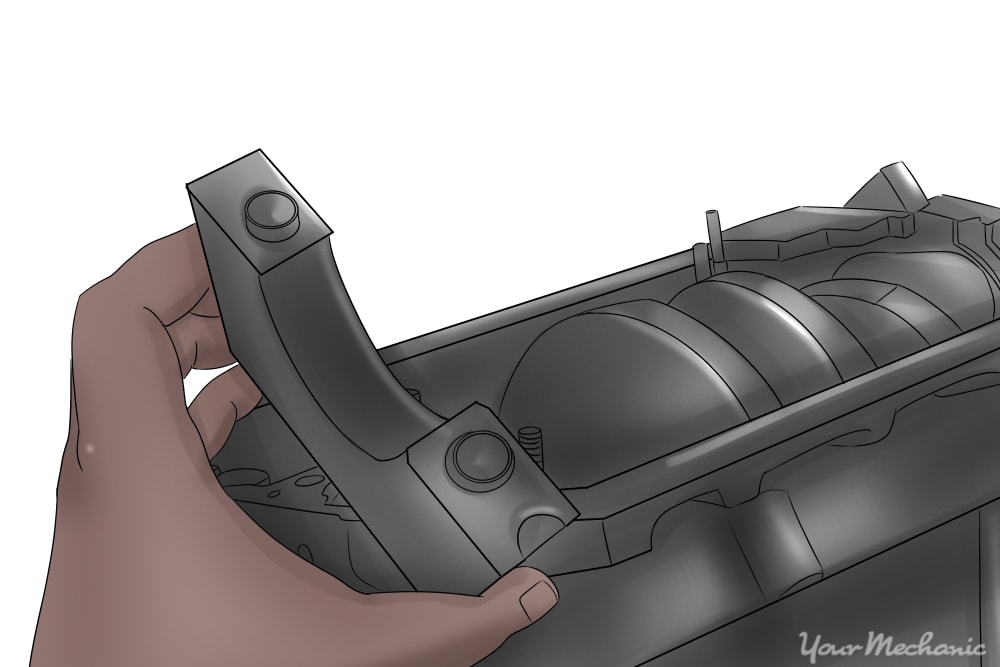
Step eight: Audit the crankshaft. The engine should now be mostly disassembled with the exception of the crankshaft.
Rotate the engine upside downward and remove the crankshaft main bearing caps, and so the crankshaft and the main bearings.
Thoroughly audit all of the crankshaft journals (bearing surfaces) for whatever signs of damage, such as scratches, scoring, signs of possible overheating, or oil starvation.
If the crankshaft has sustained visible harm, it may be a wise thought to have a machine shop double check information technology, and machine, or replace it if necessary.
Part seven of 9: Preparing the engine and components for reassmbly
Step 1: Make clean all of the removed components. At this bespeak the engine should be completely disassembled.
Lay all of the parts that are going to be reused, such every bit the crankshaft, camshaft, pistons, rods, valve covers, front and rear covers out onto a table, and thoroughly clean each component.
Remove all erstwhile gasket textile that may be nowadays, and wash the parts with warm h2o and a water soluble detergent. Then blow them dry out with compressed air.
Stride 2: Clean the engine block. Set the block and heads for reassembly past thoroughly cleaning them. Same every bit with the parts, remove all old gasket material that may be nowadays, and clean the cake with warm water and a water soluble detergent to the all-time of your power. Audit the cake and heads for signs of possible damage while yous make clean them. Then blow them dry with compressed air.

Step three: Audit the cylinder walls. Once the block is dry, thoroughly inspect the cylinder walls for any signs of scratching or scoring.
If whatever signs of serious damage are found, consider having a machine shop double check, and if necessary, motorcar the cylinder walls.
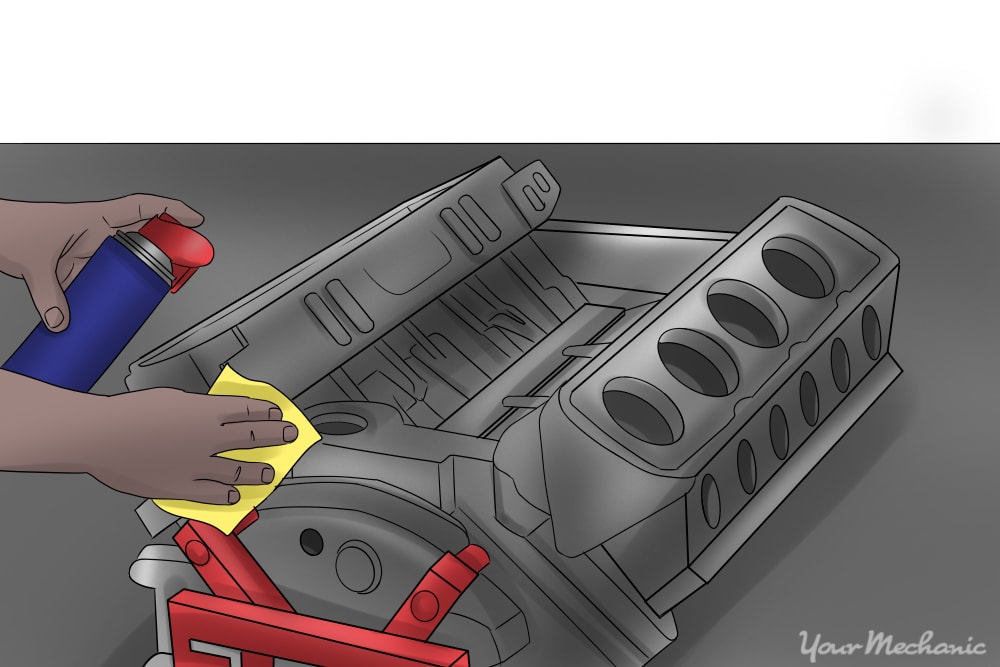
If the walls appear to be okay, mount your cylinder honing tool onto your drill, and lightly hone the walls of each individual cylinder.
Honing the walls volition make it easier to break in and seat the piston rings when the engine is started. Once the walls are honed, spray a light coat of your water deportation lubricant to proceed the walls from rusting.
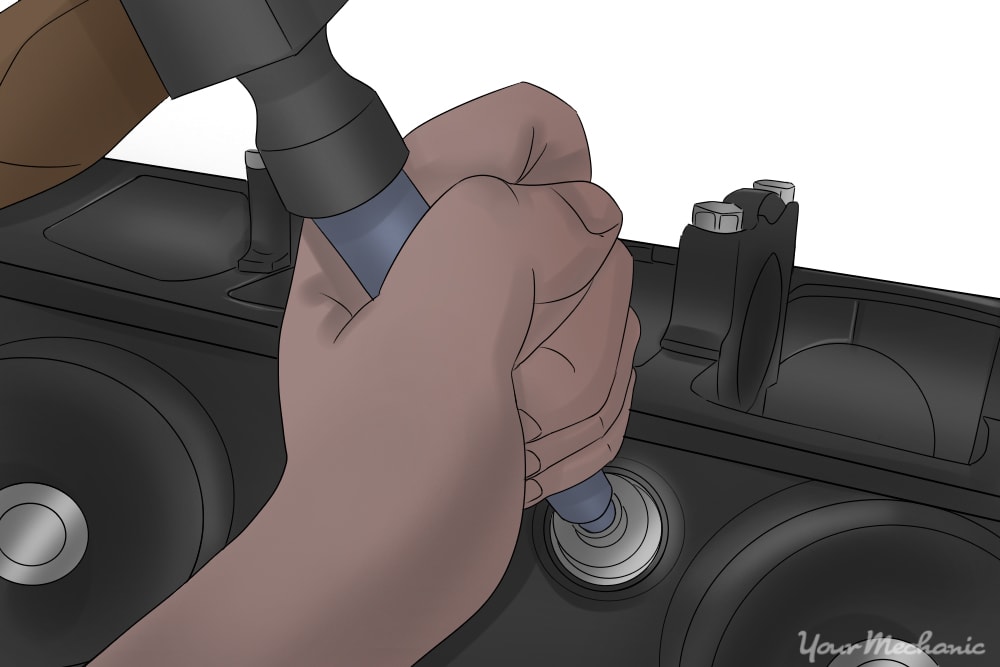
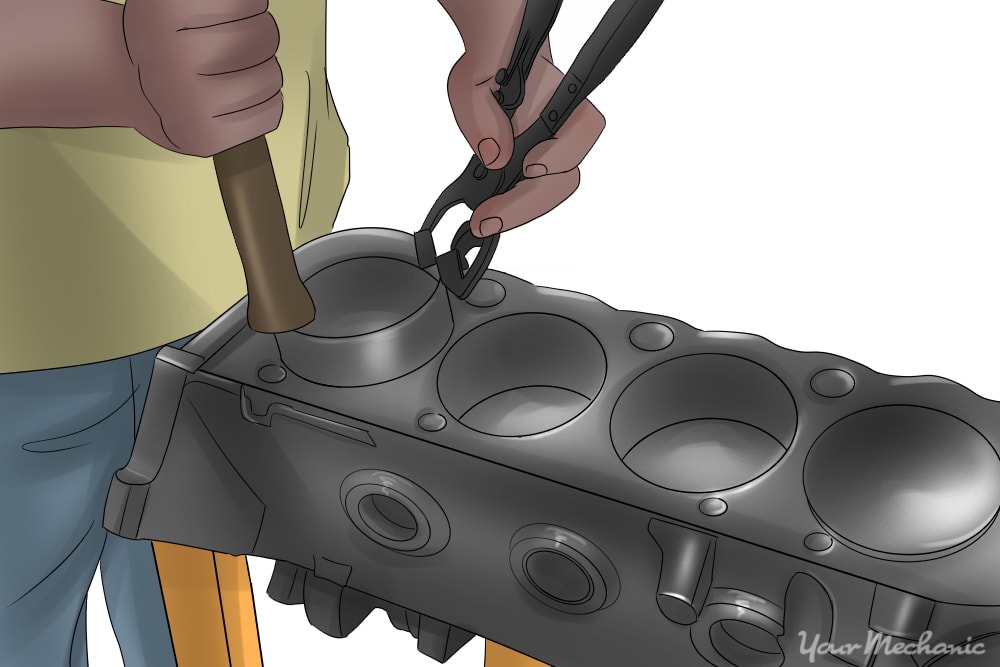
Step 4: Replace the engine's freeze plugs. Proceed to remove and replace each of the engine'southward freeze plugs.
Use a brass punch and hammer to tap one edge of the freeze plug inward. The opposite edge of the freeze plug should come up and you should be able to pull information technology out with a pair of pliers.
Install the new freeze plugs past gently tapping them into place, making certain that they install onto the block flush and fifty-fifty. At this point, the engine block itself should be ready for reassembly.
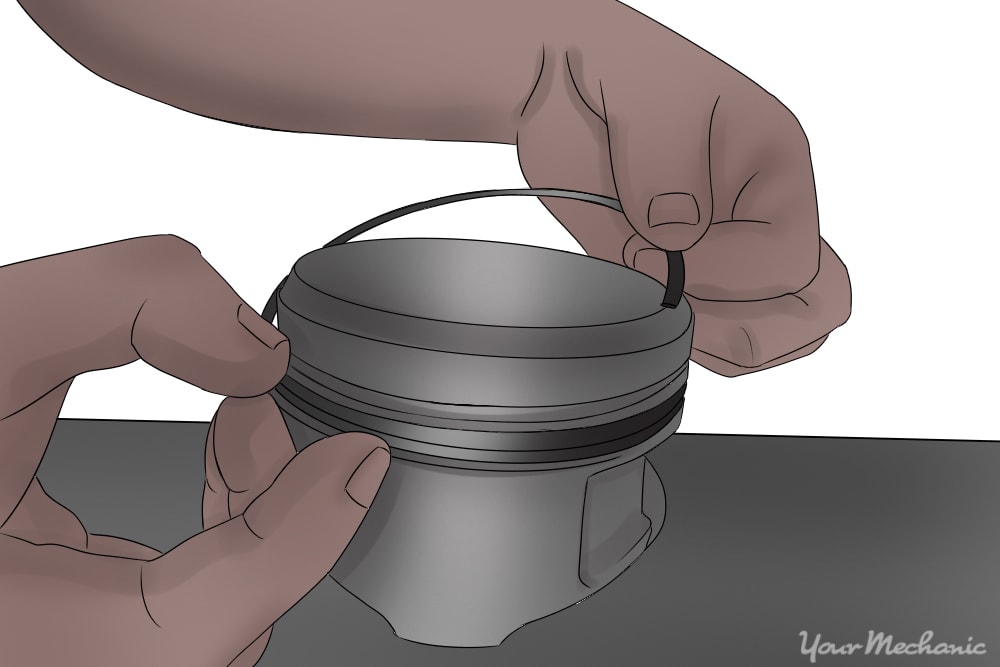
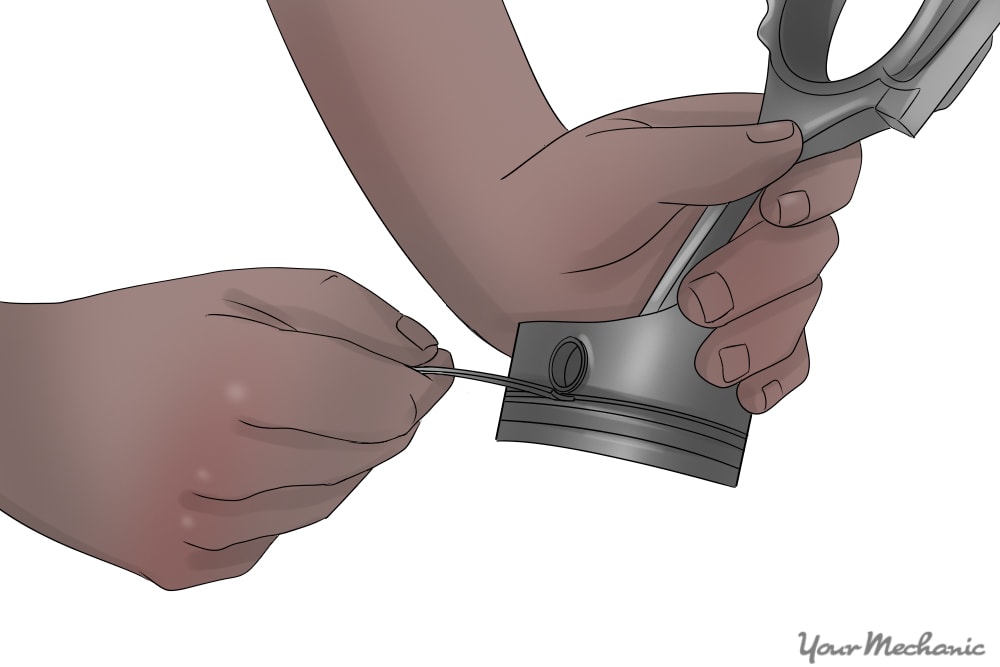
Step v: Install new piston rings. Before get-go reassembly prepare your pistons by installing new piston rings if they are included equally role of your rebuild kit.
- Tip: Follow the installation instructions provided closely, as piston rings are designed to be installed and function in a very specific way. Installing them incorrectly may atomic number 82 to issues with the engine later on down the line.
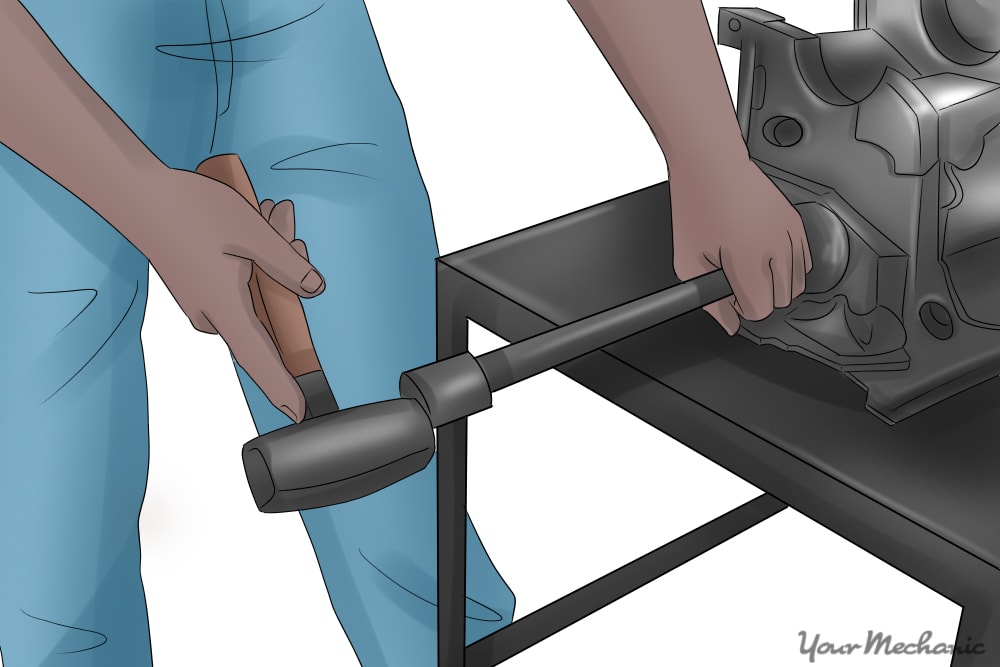
Step 6: Install new camshaft bearings. Install the new camshaft bearings using the camshaft bearing tool. Once installed, utilize a generous layer of associates lube to each of them.
Part eight of 9: Reassembling the engine
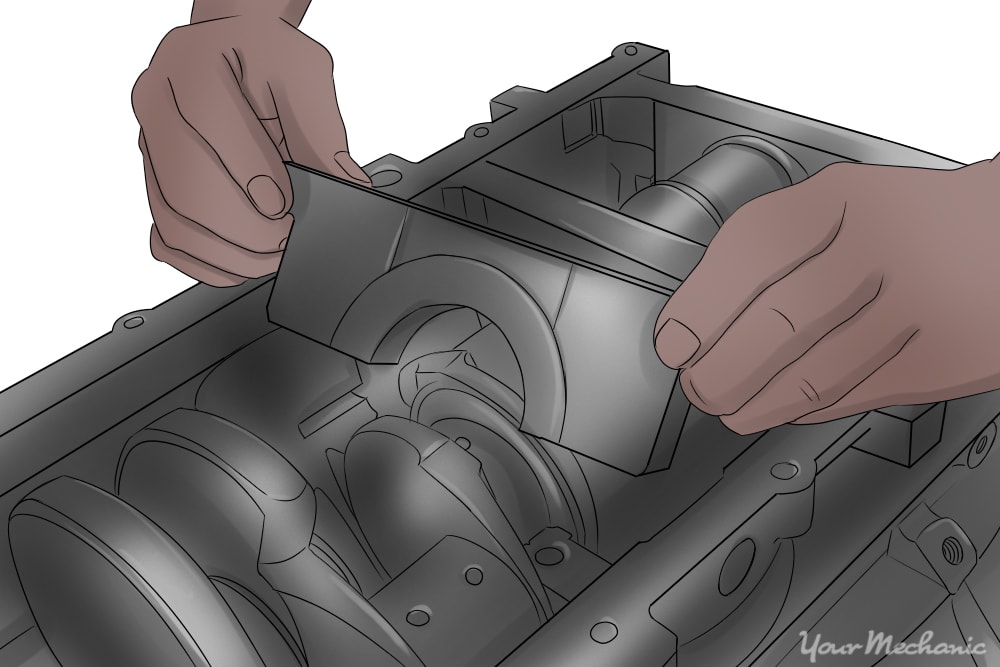
Step one: Reinstall the main bearings, crankshaft, and and then the caps. Rotate the engine upside down, and and so install the main bearings, crankshaft, and and then the caps.
Make certain to generously lubricate each bearing and journal with associates grease, and then install each main bearing cap paw tight.
The rear bearing cap may also have a seal that needs to exist installed. If that is the case, do and so at this time.
Once all of the caps are installed, torque down each cap to the proper specification, and in the correct sequence, to avoid the possibility of damaging the crankshaft due to incorrect installation procedures.
In one case the crankshaft is installed rotate it past manus to brand sure that information technology turns smoothly and does not bind. Refer to your service transmission if you are unsure about any of the specifics for installing the crankshaft.
Step ii: Install the pistons. At this indicate, you are set up to install the pistons. Prepare the pistons for installation by installing the new bearings onto the rods, then installing the pistons into the engine.
Equally the pistons rings are designed to aggrandize outward, like springs, utilize the cylinder ring compression tool to compress them, and then lower the piston downwards into the cylinder, and onto the corresponding crankshaft journal.
Once the piston is lowered into the cylinder and the begetting on the crankshaft journal, rotate the engine upside down and install the corresponding connecting rod finish cap onto the piston.
Repeat this procedure for each piston until all the pistons are installed.
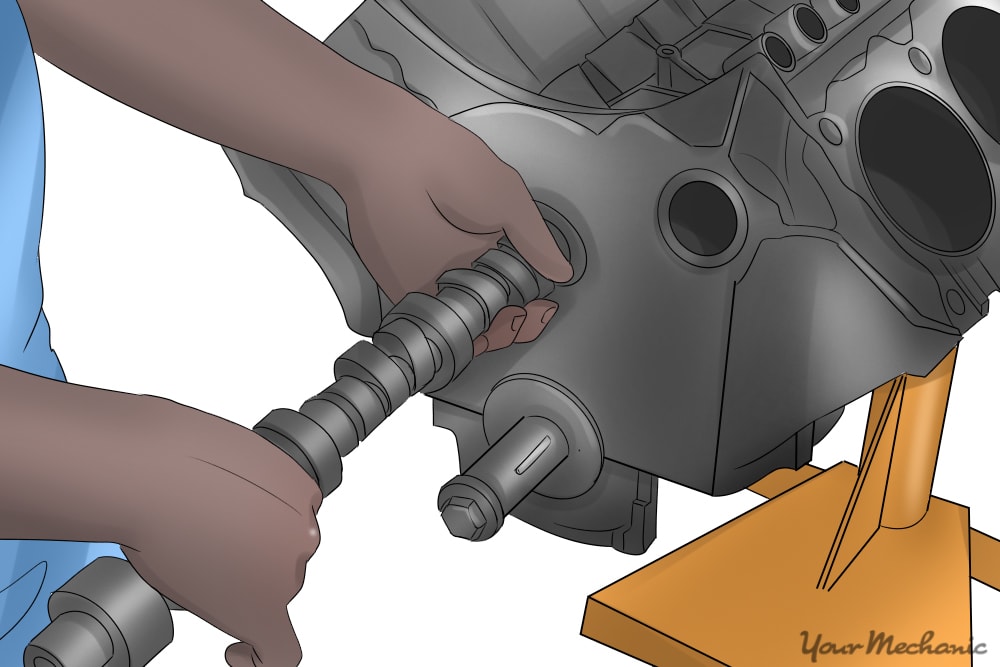
Step iii: Install the camshaft. Apply a generous layer of assembly lube to each one of the camshafts journals and and cam lobes and then carefully install it into the engine cake, taking intendance not to scratch or score any of the bearings when installing the camshaft.
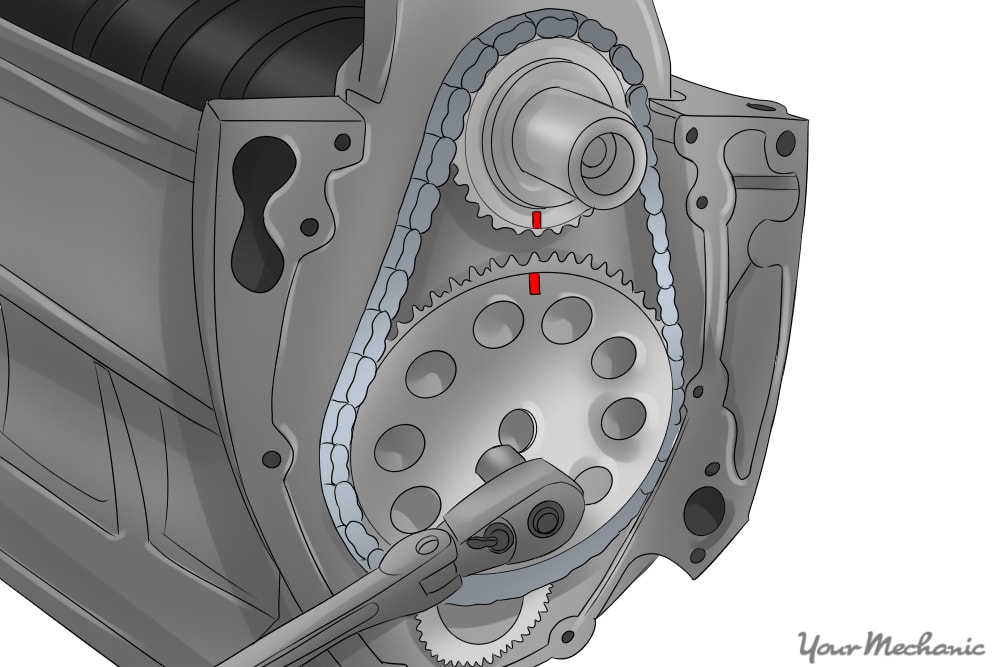
Stride four: Install the timing components. With the cam and crank installed we are at present set to install the timing components, the cam and creepo sprockets and timing chain.
Install your new sprockets, and then clock them according to the instructions provided with your timing kit or in your service manual.
For most pushrod engines it is a simple matter of turning the cam and crankshaft until the correct cylinder or cylinders are at TDC, and the marks on the sprockets line up in a certain manner or indicate in a certain direction. Refer to the service transmission for specifics.
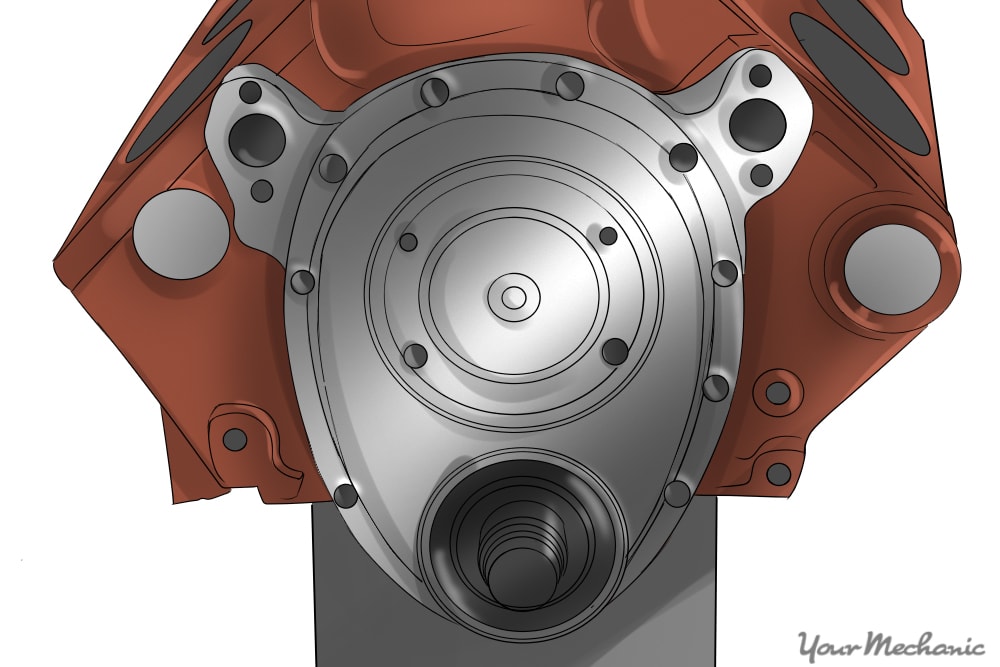
Pace 5: Test the crankshaft. At this point the rotating assembly should be fully assembled.
Rotate the crankshaft by mitt a few times to verify that the cam and crank sprockets are installed correctly and and then install the timing chain cover and the rear engine cover.
Make sure to replace whatever seals or gaskets that are pressed into the engine covers with new ones.
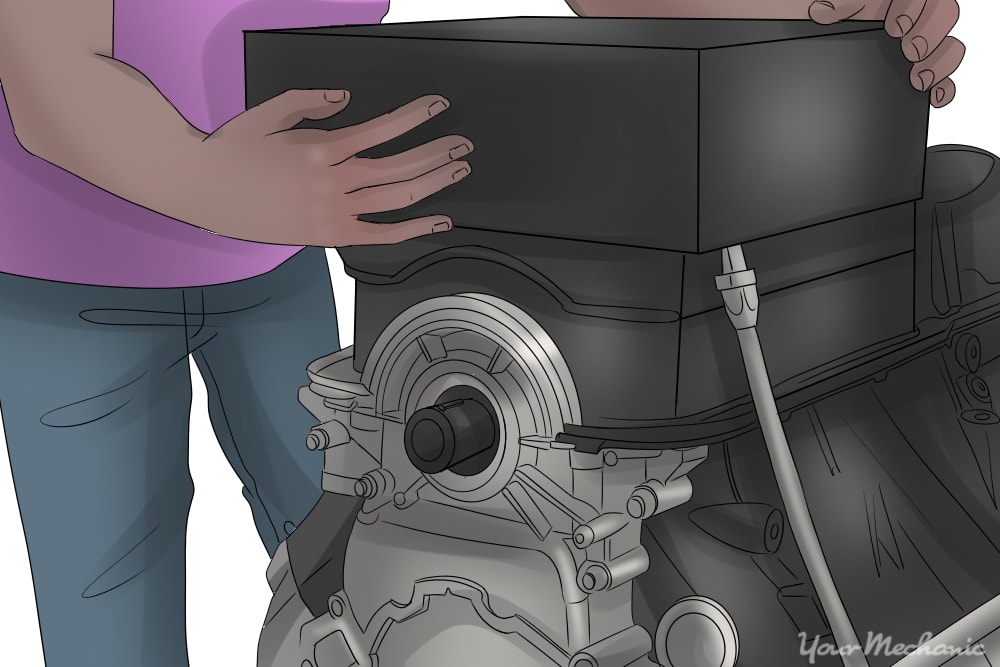
Pace 6: Install the oil pan. Rotate the engine upside down and install the oil pan. Use the gasket provided in your rebuild kit or make your own with silicone gasket maker.
Call back to lay a thin dewdrop of silicone gasket maker along whatsoever corners or edges where the pan and gaskets encounter.
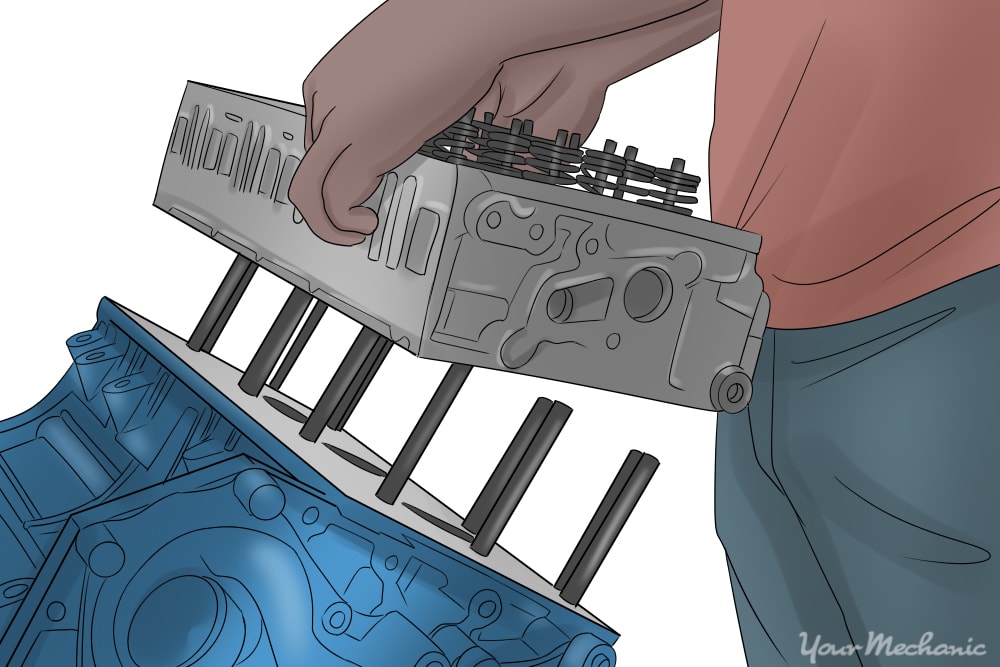
Pace vii: Install the caput gaskets and head. With the lower end now assembled, we can brainstorm to get together the engine's top end.
Install your new head gaskets that should be included as role of your rebuild kit, taking care to make sure that they are installed with the correct side facing upwardly.
In one case the head gaskets are in place, install the heads, so all of the head bolts, tightening them hand tight. Then follow the proper procedure for torquing the caput bolts.
There is commonly a torque specification and sequence that demand to be followed, and oft times repeated more than one time. Refer to your service manual for specifics.
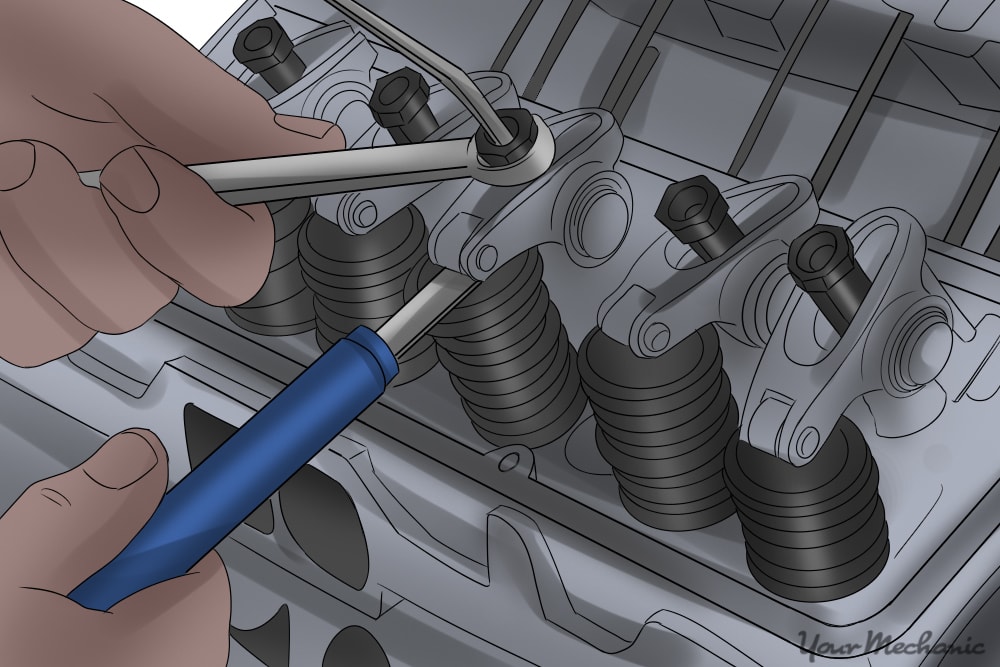
Footstep 8: Reinstall the valve train. Once the heads are installed you can reinstall the balance of the valve train. Begin past installing the lifters, the guide retainer, so the pushrods and rocker arms.
- Tip: Retrieve to glaze all of the components with assembly lube as you install them, to protect them from accelerated wear when the engine is first started.
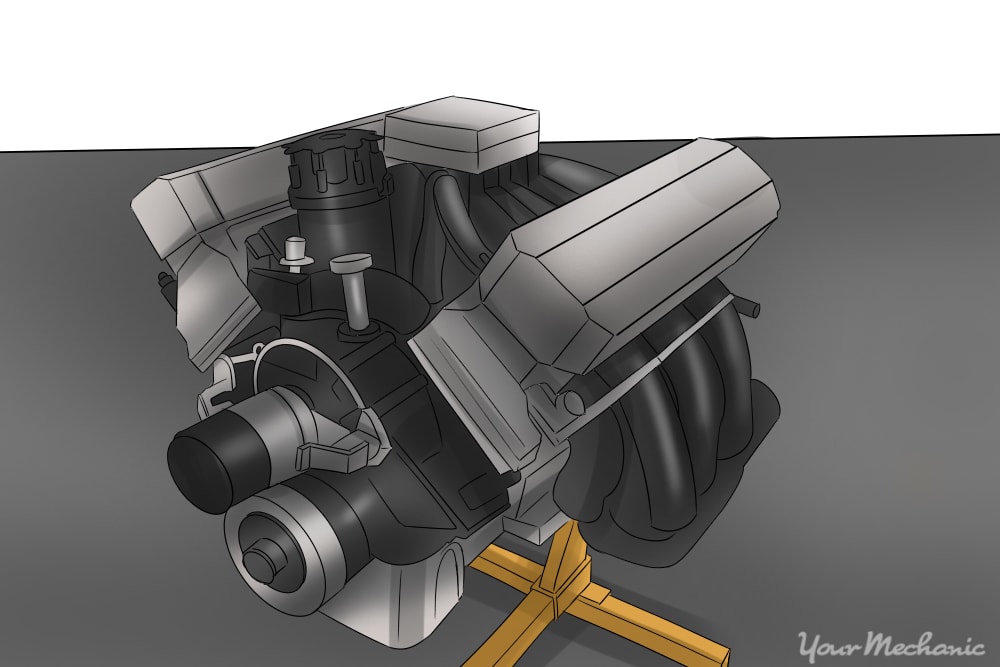
Step 9: Install covers and intake manifold. Install the valve covers, rear engine comprehend, and then intake manifold.
Use the new gaskets that should be provided with your rebuild kit, remembering to lay a dewdrop of silicone around any corners or edges where mating surfaces meet, and around the water jackets.
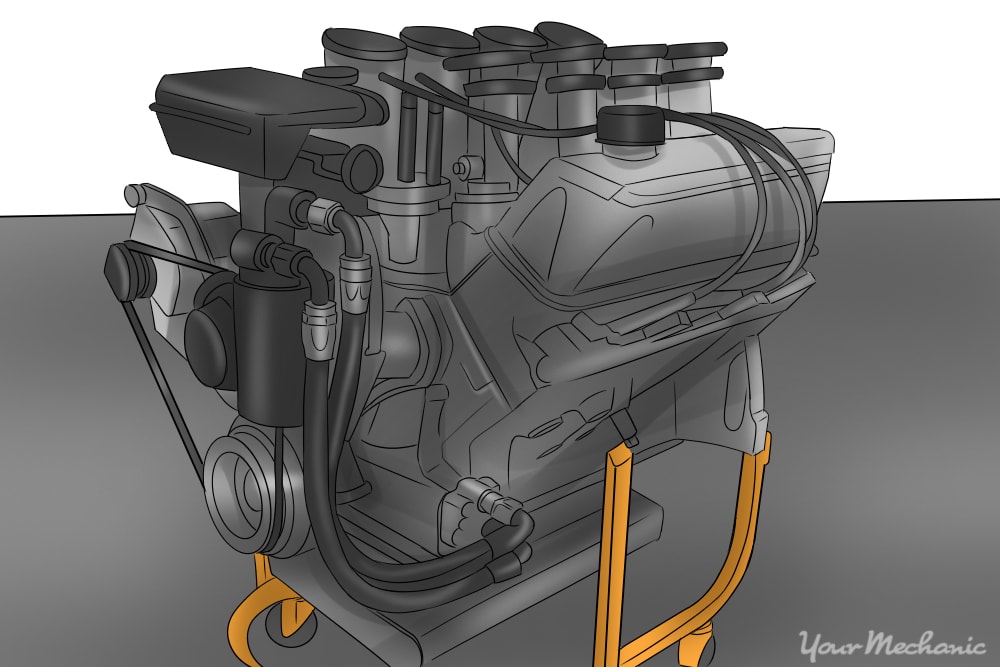
Step 10: Install the water pump, frazzle manifolds, and flywheel. At this point the engine should most exist fully reassembled, with simply the h2o pump, exhaust manifolds, flexplate or flywheel, and accessories left to install.
Install the water pump and manifolds using the new gaskets provided in your rebuild kit, and and then continue to install the rest of the accessories in the opposite of the order in which you removed them.
Office 9 of 9: Reinstalling engine into vehicle
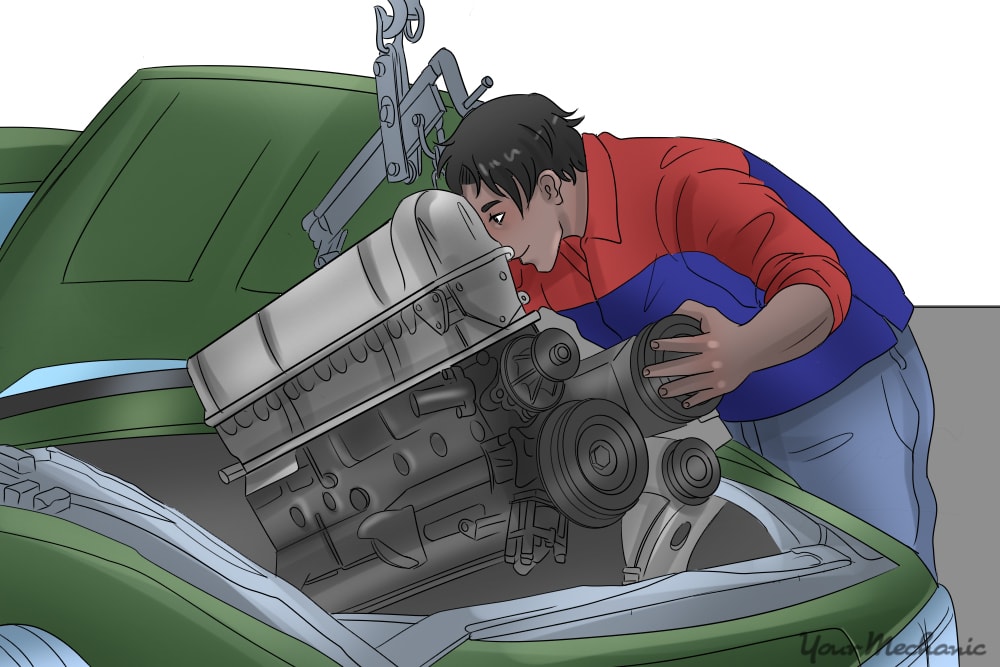
Pace one: Mount the engine back onto your hoist. The engine should now be fully reassembled and set up for installation in the vehicle.
Mount the engine dorsum onto your hoist, so into the vehicle in reverse of the order in which it was removed, as shown in Steps 6-12 of Part iii.
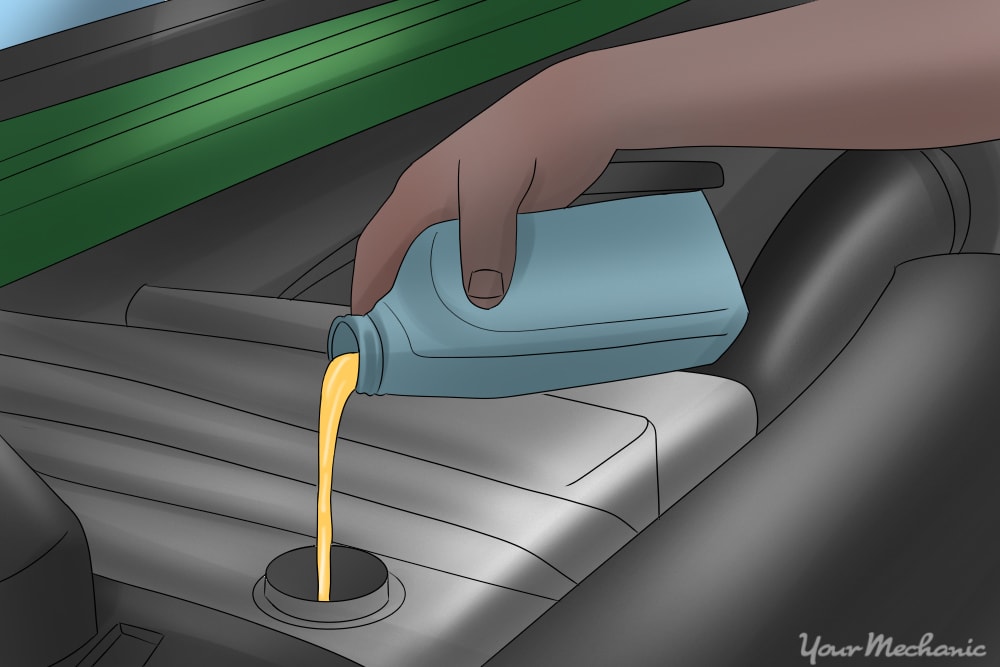
Step 2: Reconnect the engine and fill with oil and coolant. Once the engine is mounted, reconnect all of the hoses, electrical connectors and harnesses in opposite of the order that you removed them, and then fill the engine up to level with oil and antifreeze.
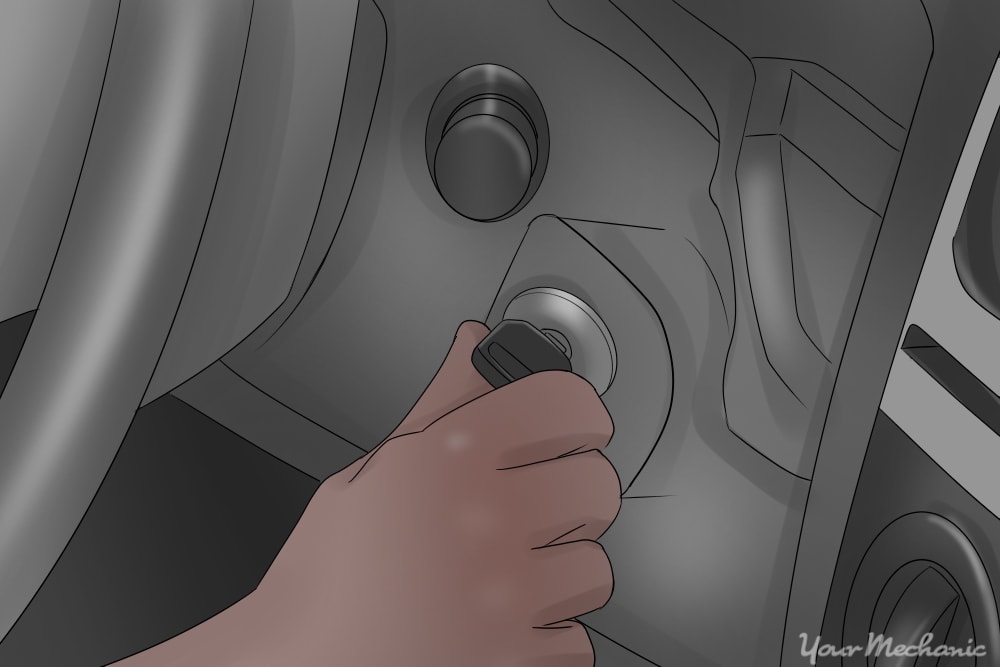
Step 3: Exam the engine. At this point the engine should exist ready to start. Make your concluding checks, and then refer to your service transmission for the verbal procedures for engine offset upwards and break in to ensure you lot become the optimum operation and life from your rebuilt engine.
All things considered, rebuilding an engine is no small-scale job, however, with the right tools, knowledge, and fourth dimension, this is a task that is very possible to do on one's ain. While YourMechanic does not currently offer engine rebuilding as function of its services, it is always a skillful idea to get a 2d opinion before taking on an intensive job such equally this. If y'all demand to have your automobile inspected, YourMechanic provides comprehensive inspections to make sure that y'all are making the right repair with your car.
The statements expressed above are only for informational purposes and should exist independently verified. Please run into our terms of service for more details
Source: https://www.yourmechanic.com/article/how-to-rebuild-a-car-engine
0 Response to "whats the easiest engine to rebuild for a novice"
ارسال یک نظر